Effective Vocal Practice Routines for Stronger Singing: Daily Exercises and Techniques to Improve Your Voice

Effective vocal practice routines systematically prepare and strengthen the voice by combining targeted warm-ups, breath control, technical drills, and recovery strategies. This guide teaches practical daily exercises, time-efficient templates, and troubleshooting steps so you can build vocal stamina, expand range, and protect vocal health through consistent practice. Many singers struggle with inconsistent breath support, tension, and inefficient practice plans; a structured routine fixes these by mapping goals to exercises and tracking progress.
You will learn the best vocal warm-ups, diaphragmatic breath drills, a three-step routine framework with sample 20–30 minute and 45–60 minute templates, and clear vocal health protocols for recovery and longevity.
The article covers safe warm-up choices like lip trills, sirens, and straw phonation, shows how breath control translates into longer phrases and consistent tone, and offers personalization tips for range expansion or stamina building.
Each section includes short lists and comparison tables to help you pick exercises by purpose, difficulty, and when to use them, so you can move from assessment to practice with measurable progress.
What Are the Best Vocal Warm-Ups for Stronger Singing?
Vocal warm-ups are targeted exercises that gently activate the vocal folds, respiratory muscles, and resonators to improve coordination and reduce injury risk. By increasing blood flow, reducing tension, and engaging resonant spaces (mask, chest, head), warm-ups prime pitch accuracy and vocal stamina before technique work or performance. The following core warm-ups address breath support, resonance, and tension release and can be adapted for daily practice or quick pre-show routines. Understanding which warm-up to use for a given goal speeds progress and prevents vocal fatigue during intensive practice.
This short list highlights essential warm-ups with one-line instructions and typical use-cases:
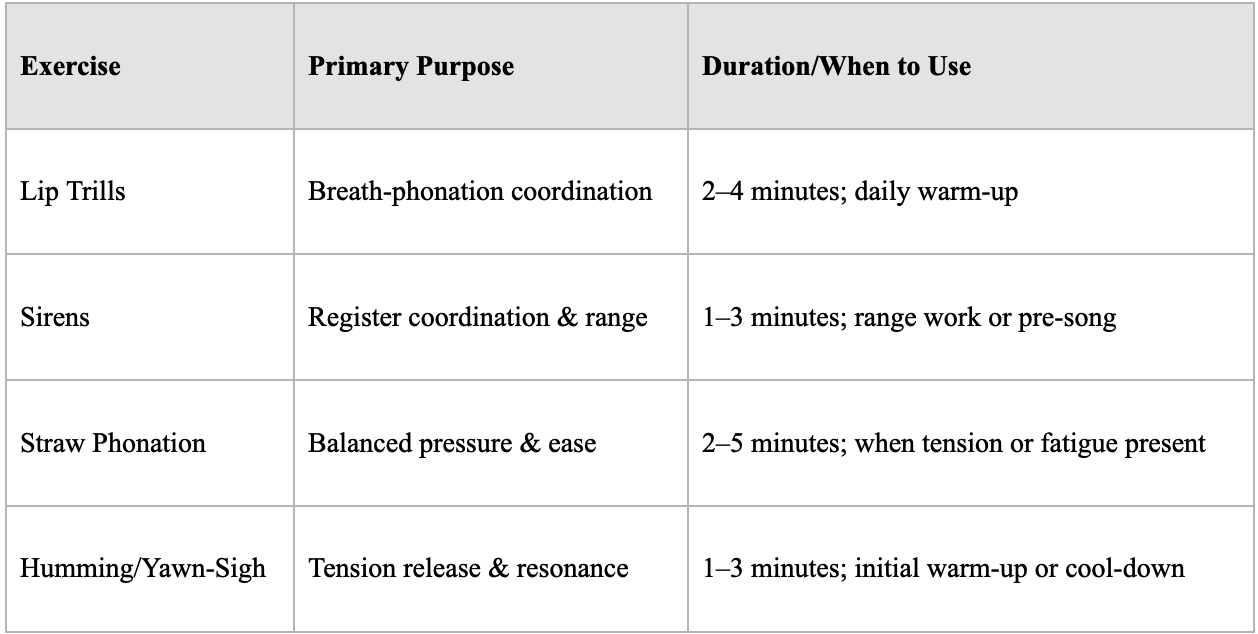
This comparison helps you choose warm-ups by immediate need—coordination, range, tension reduction—which naturally leads into safer step-by-step application of each exercise in practice.
Which Vocal Warm-Up Exercises Prepare Your Voice Safely?
Lip trills, gentle humming, and SOVT exercises prepare the voice by encouraging a steady subglottal pressure and minimizing harsh adduction that can strain the vocal folds. Perform each exercise within a comfortable pitch range and maintain relaxed jaw, tongue, and neck to avoid compensatory tension. Common mistakes include pushing volume early and forcing high notes; instead, focus on consistent airflow and easy onset sensations. Practicing a 3–5 minute mini routine of lip trills, humming into the mask, and a few slow sirens warms tissues safely and readies you for technical drills.
These safe warm-up practices reduce acute strain and set the stage for breath-focused work, which builds the power and stamina discussed next.
How Do Vocal Warm-Ups Prevent Strain and Improve Performance?
Warm-ups prevent strain by gradually increasing vocal fold pliability and respiratory muscle coordination, which reduces collision force during phonation and stabilizes pitch. Increased blood flow and neural activation enhance fine motor control, improving intonation and dynamic control under load. Practically, singers experience fewer breaks, less throat tightness, and clearer resonance during longer runs and demanding phrases. Recognizing how warm-ups affect performance allows you to prioritize specific exercises before rehearsals or shows for predictable, stronger results.
That predictable improvement from warm-ups naturally transitions into breath control as the engine of sustained singing.
How Can Breath Control Exercises Enhance Your Singing Voice?
Breath control, centered on diaphragmatic engagement, supplies steady subglottal pressure for consistent tone, dynamic range, and extended phrases. Diaphragmatic breathing works by lowering the diaphragm on inhale, expanding the lower ribs and engaging the core to manage exhalation for even airflow; this mechanism supports power without straining the throat.
Improved breath control yields measurable outcomes: longer phrases, more even tone across dynamics, and reduced vocal fatigue during runs or high-intensity singing. The exercises below map common drills to anatomy and expected benefits so you can target stamina and power.
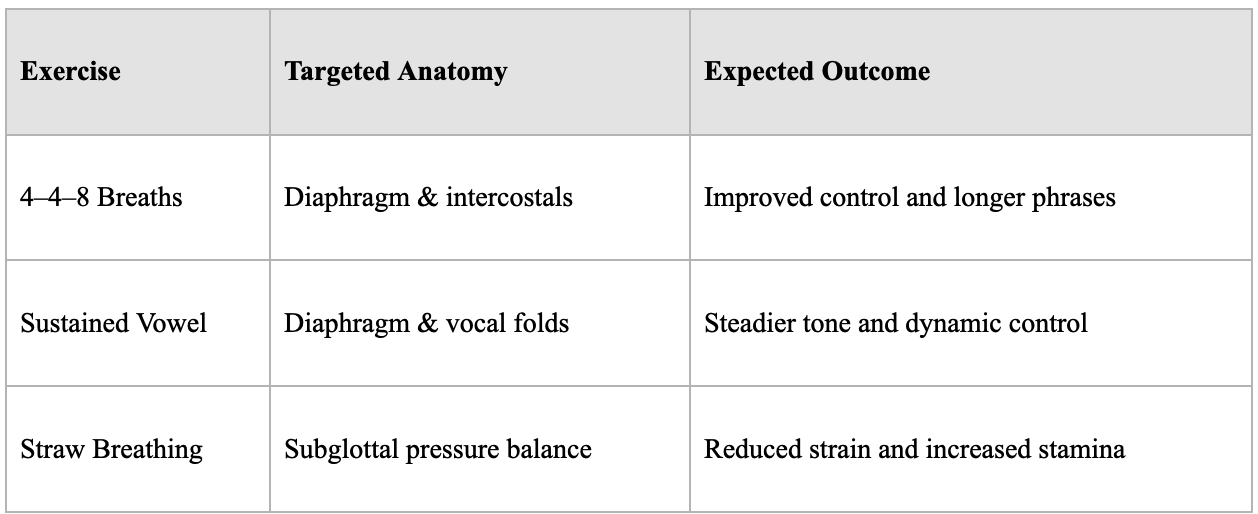
These mappings show how specific drills translate into measurable gains, and practicing them regularly builds the breath foundation necessary for advanced technique.
What Are Effective Diaphragmatic Breathing Techniques for Singers?
Start with slow nasal inhalation engaging the lower ribs and abdomen, then release on a controlled exhale with a gentle engaged core; avoid shoulder lift or throat tightening. Practice sets of five slow diaphragmatic breaths with counts (e.g., inhale 4, exhale 6–8) and progress by increasing exhale length while maintaining steady phonation.
Self-checks include feeling rib expansion and placing a hand on the lower abdomen to confirm engagement. These drills teach the recruitment pattern needed for sustained lines and dynamic shading without pushing.
Mastering diaphragmatic patterns in breath drills directly supports building longer phrases and vocal power explored next.
How Does Breath Control Build Vocal Stamina and Power?
Breath control builds stamina by optimizing air usage—delivering consistent subglottal pressure for efficient vocal fold closure without over-pressurizing tissues. Progressive endurance drills, such as timed sustained phonation and gradually extended phrase lengths over weeks, increase respiratory muscle endurance and vocal fold coordination.
For example, practice sustaining a comfortable vowel for incremental time increases three times per week to track improvement. Consistent breath training converts into measurable on-stage benefits: steadier high notes, controlled forte passages, and less fatigue after back-to-back performances.
Improved breath economy then informs how to structure daily practice routines for reliable progress.
How Do You Create a Daily Vocal Practice Routine for Stronger Singing?
A practical daily routine follows a three-step framework: assess goals, select goal-aligned exercises, and schedule focused practice with tracking to measure gains.
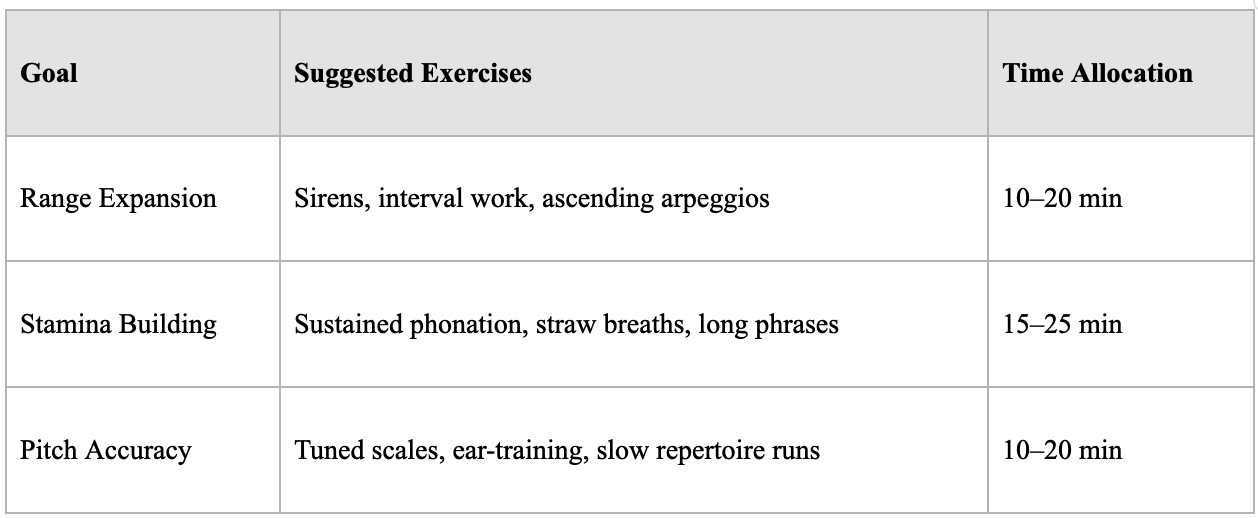
Assessing means identifying whether your priority is range expansion, stamina, or pitch accuracy; this determines exercise selection and time allocation. A clear plan allocates warm-up, technical work, repertoire, and cool-down segments so every session advances specific objectives.
Using short, consistent sessions with progressive overload prevents overuse while producing steady improvement.
Below are quick template routines that fit common schedules and goals to get you started efficiently.
What Is the Ideal Duration and Frequency for Daily Vocal Practice?
For most singers, consistent short sessions outperform occasional long ones: 15–30 minutes daily yields steady gains while avoiding fatigue, and 45–60 minutes is appropriate for advanced students with adequate recovery.
Beginners should aim for 15–30 minutes five times per week, intermediates 30–45 minutes, and advanced singers may work 45–60 minutes with strategic breaks and voice rest.
Avoid back-to-back exhaustive days; instead schedule lighter technical days and at least one recovery day weekly to prevent overuse. These frequency guidelines preserve vocal health while enabling cumulative improvement.
Choosing the right duration depends on goals, current stamina, and time availability, which informs how to personalize your practice load.
How Can You Personalize Your Vocal Routine to Match Your Goals?
Start with an honest assessment: record a short performance to identify weaknesses in range, breath, or pitch, then map those priorities to targeted exercises and time blocks. For range expansion, allocate more time to sirens and ascending interval work; for stamina, emphasize sustained phonation and low-pressure SOVT drills.
Track progress with simple metrics such as maximum comfortable note, sustained-note time, or repertoire accuracy and revise the plan every 2–4 weeks.
Personalization also accounts for genre—belting requires safe chest-register coordination while classical work emphasizes resonance and consistent support—so adapt exercises to your stylistic demands.
Regular assessment and metric-driven adjustments ensure your routine remains aligned with evolving goals and prevents plateauing.
What Are Key Tips to Maintain Vocal Health During Practice?
Maintaining vocal health hinges on hydration, structured warm-up and cool-down, sufficient sleep, and recognizing early fatigue signs to stop and rest. Adequate hydration lubricates the vocal folds and supports pliability, while cool-downs reduce post-practice swelling and restore balanced phonation; combining these routines preserves long-term vocal stamina.
Monitor warning signs like persistent hoarseness, throat pain, or reduced range; immediate actions include voice rest, hydration, and switching to gentler SOVT work until recovery. Preventive strategies and timely mitigation protect your voice and ensure consistent progress.
Practical tools and professional services further support vocal recovery and hygiene while you implement these daily habits.
How Does Hydration and Rest Support Vocal Recovery?
Hydration maintains the mucosal layer on the vocal folds, which reduces friction during vibration and supports efficient closure for clear tone.
Aim for regular water intake across the day and avoid dehydrating substances before intense practice; consider room humidification in dry environments to preserve mucosal hydration.
Rest—both nightly sleep and strategic voice rest days—allows microtrauma to resolve and respiratory muscles to recover, improving subsequent practice quality.
Expect noticeable recovery within 24–72 hours for mild fatigue, but extend rest if symptoms persist to avoid longer-term damage.
Proper hydration and rest are fundamental preventive measures that reduce the likelihood of vocal fatigue and the need for reactive treatment.
What Are Common Signs of Vocal Fatigue and How to Avoid Them?
Common signs include increased effort to sing, breathiness, loss of top notes, persistent hoarseness, and a sore throat; these indicate strained vocal fold vibration or insufficient support. Immediate measures are to stop singing, rest the voice, rehydrate, and switch to gentle SOVT or humming if phonation is needed; avoid throat clearing and loud talking.
Preventive strategies include balanced practice schedules, consistent warm-ups and cool-downs, and monitoring daily voice metrics to catch trends early. If symptoms persist beyond a week or include pain, consult a voice therapist or ENT for assessment to rule out pathology.
In addition to medical support, simple tools like humidifiers and tuner apps assist self-monitoring and environmental management to sustain vocal health while you continue structured practice.