Bass Guitar Lessons in Georgetown, KY

Learning bass guitar in Georgetown, KY means developing foundational groove, harmonic support, and ensemble skills that translate directly to playing with bands, school ensembles, and recording projects. This article explains what bass lessons cover, how they improve timing and musicality, how to choose the right Georgetown bass teacher, and where to find in-person or online instruction. Readers will learn clear outcomes for beginners through advanced players, practical practice routines, and how lesson formats and scheduling affect progress.
If you struggle with timing, feel uncertain about music theory, or want to audition for a local group, targeted bass instruction provides structured milestones and focused technique work to accelerate growth. The following sections break down key benefits, selection criteria for instructors, a staged curriculum outline, and a comparison of lesson delivery options so you can decide how to start or refine your bass studies in Georgetown.
What Are the Benefits of Taking Bass Guitar Lessons in Georgetown?
Bass lessons develop rhythm, harmony awareness, and practical ensemble skills that help students play tighter with drummers and other instrumentalists. Formal instruction teaches technique, reading basics, and ear training; these mechanics strengthen groove and musical judgment, leading to better band performance and studio readiness.
Lessons also boost creativity by teaching arrangement roles and encouraging improvisation within a song context, which builds confidence for live gigs. Improving timing and tone makes students more employable in local ensembles and more effective collaborators, which naturally leads into choosing the right teacher for your goals.
How Can Learning Bass Improve Your Musical Skills and Creativity?
Learning bass improves musical skills by focusing on rhythm, harmony, and listening—three areas central to ensemble playing and arrangement. Students practice groove-building exercises, scale-based bass lines, and call-and-response ear training that sharpen timing and adaptive listening.
Technique drills like fingerstyle repetition and metronome-based subdivisions increase consistency and dynamic control, while repertoire work encourages creative bass line construction and arrangement thinking. These skills together enable players to move from rote copying to crafting supportive, musical bass parts that elevate any band performance.
What Makes Bass Guitar Lessons in Georgetown Unique?
Georgetown’s local music environment influences lesson focus by exposing students to community gigs, school ensembles, and diverse local genres without claiming specific partnerships. Instructors often tailor repertoire to regional styles and available performance opportunities, helping students prepare for real-world settings such as open mics or school shows. The availability of both in-person and online formats in the area lets learners practice with hands-on guidance or flexible remote coaching depending on their needs. This local context encourages practical, performance-oriented lesson planning that bridges technique with actual playing situations.
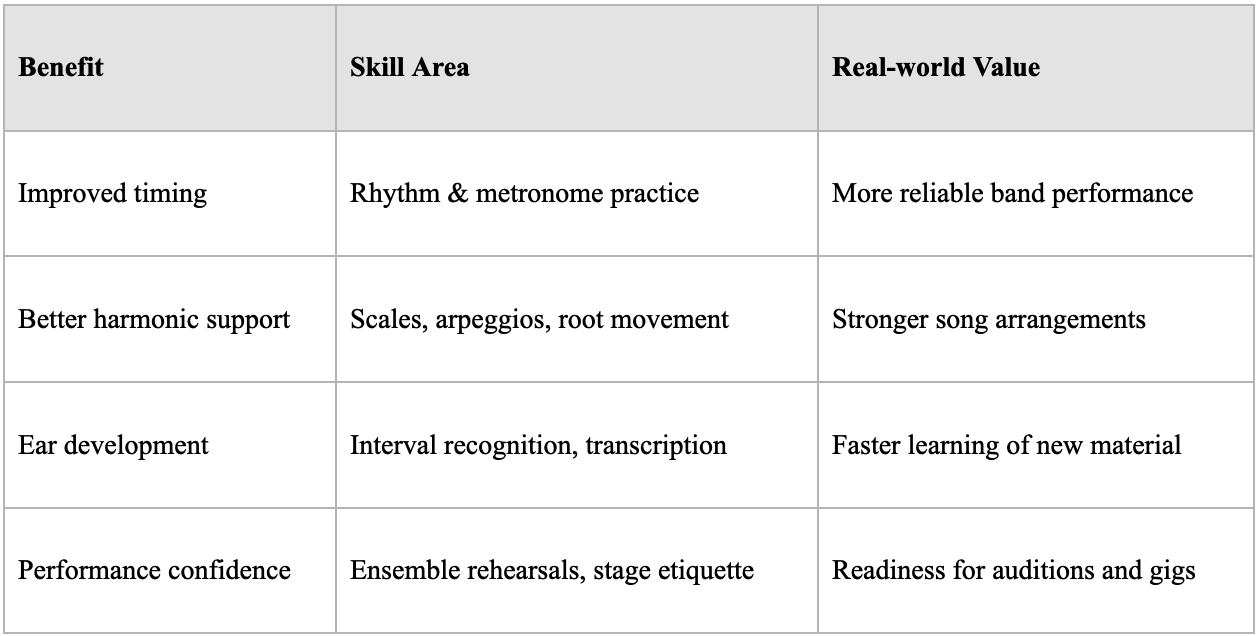
Intro to benefit mapping table: the table below links concrete lesson benefits to skill areas and real-world outcomes so you can see how weekly practice converts into practical musical gains.
How to Choose the Best Georgetown Bass Guitar Teacher for Your Needs?
Choosing a bass teacher means balancing qualifications, teaching approach, and logistics to match your goals and schedule. Look for instructors who demonstrate both teaching experience and active performance or studio work, since real-world playing informs practical teaching.
Prioritize teachers who offer structured progression, clear milestones, and trial or assessment lessons so you can evaluate fit before committing long-term. Consider lesson length, frequency, and the teacher’s ability to adapt curriculum to your genre interests; these factors shape how quickly you reach playable outcomes and how lessons fit daily practice routines.
What Qualifications and Experience Should a Georgetown Bass Instructor Have?
A strong instructor combines demonstrable teaching experience with active performing or recording credentials in relevant genres. Must-haves include the ability to teach music theory applicable to bass, clear communication about goals, and a track record of developing students through level-based milestones. Nice-to-haves are genre-specific expertise (jazz, funk, rock) and familiarity with studio or live performance preparation. Sample questions to ask include whether the teacher provides a curriculum outline, how they track progress, and whether they offer a trial assessment to align expectations early on.
How Do Private Bass Lessons in Georgetown Offer Personalized Learning?
Private lessons adapt technique, repertoire, and practice plans to student goals and learning speed through individualized lesson plans and progress tracking. For example, a beginner receives posture and basic groove work, a hobbyist adult focuses on song-based learning and time-efficient practice, and an aspiring pro gets advanced theory, improvisation, and studio technique. Teachers use recordings, notation, and targeted exercises to keep lessons relevant and measurable. Regular review and assigned practice tasks ensure steady improvement while maintaining student motivation and musical direction.
The following checklist summarizes how to evaluate prospective instructors:
Teaching experience and clear curriculum: ensures steady progression.
Demonstrated performance/recording work: indicates practical expertise.
Trial/assessment lesson availability: lets you test compatibility.
Flexibility in lesson format and scheduling: matches your life commitments.
Clear progress tracking and practice recommendations: supports measurable gains.
This checklist helps you narrow options quickly and choose a teacher who aligns with both musical goals and practical constraints, leading naturally into what a structured curriculum should cover.
What Should You Expect from Bass Guitar Instruction in Georgetown, KY?
Expect lessons to combine warm-ups, technique work, repertoire study, theory, and review in each session to create balanced progress. A typical lesson includes posture and right/left-hand mechanics, groove-building exercises, transcription or ear-training tasks, and song application that ties each technical element to real music. Teachers set measurable milestones—basic groove consistency, scale fluency, stylistic versatility—and recommend regular practice slots to convert lesson learning into habits. Understanding these components clarifies how weekly lessons translate into concrete musical competencies over months.
Which Bass Guitar Techniques and Styles Are Covered in Lessons?
Lessons usually cover fingerstyle technique, slap and pop, picking, muting, and right-hand dynamics, along with styles such as rock, funk, jazz, and blues. Exercises emphasize hand independence, tone control, and feel through scale-based grooves, syncopated patterns, and stylistic licks. Instructors prioritize techniques by student level—basic fingerstyle and root-note grooves for beginners, advanced slap and improvisation for experienced players. Practice examples include 8th-note pocket grooves, walking bass lines for jazz, and syncopated funk ostinatos to build stylistic fluency.
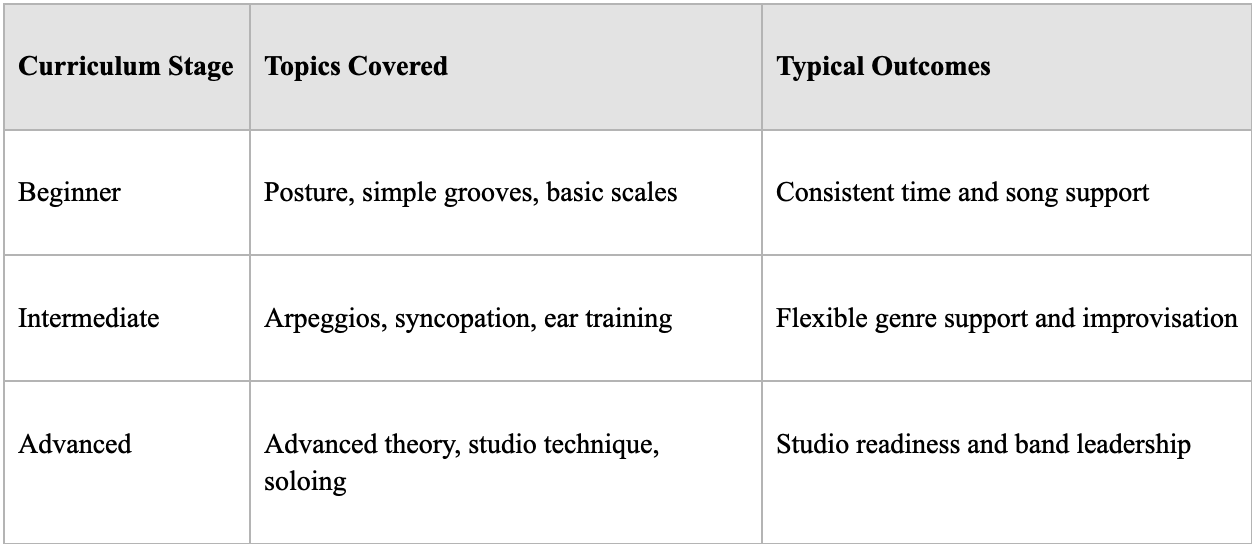
Intro to curriculum table: the table below outlines typical stage-based curriculum topics and outcomes so you can set expectations for progress across levels.
Common lesson expectations summarized:
Weekly structure with warm-up, technique, repertoire, and theory.
Clear short-term practice goals tied to songs or exercises.
Progress milestones at monthly and quarterly intervals.
Where and How Can You Access Bass Guitar Lessons in Georgetown, KY?
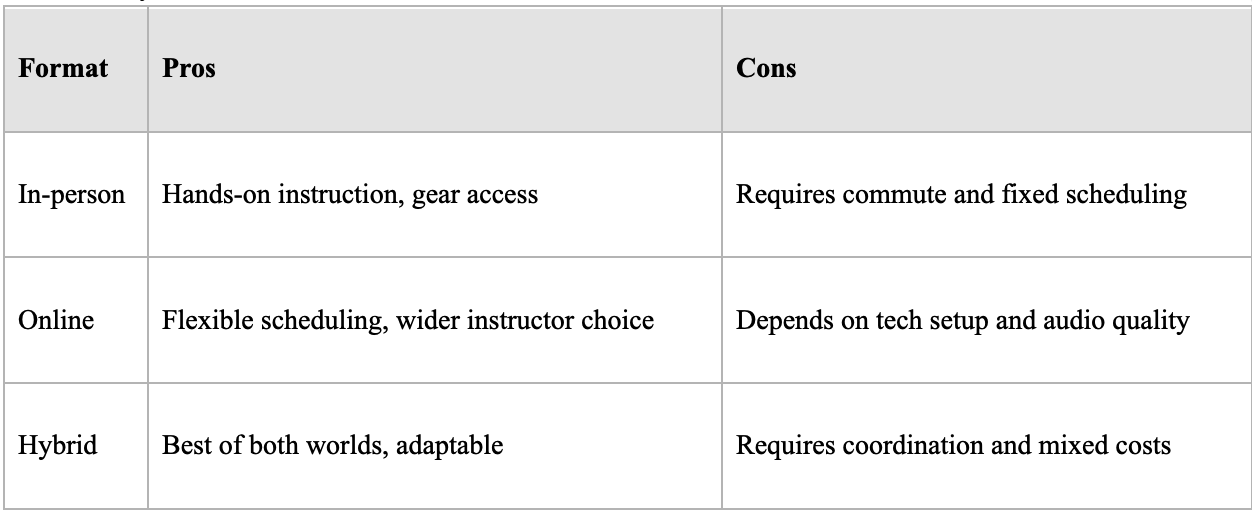
Learners can access lessons through in-person studios, independent private instructors, or online platforms offering live remote coaching, each with practical trade-offs. In-person lessons provide hands-on adjustment and direct amp/equipment feedback, while online lessons deliver scheduling flexibility and access to a broader instructor pool.
Hybrid options combine occasional studio sessions with regular online check-ins for convenience and depth. Choosing the right delivery method depends on commute, hands-on needs, and personal learning preferences.
Are There Online and In-Person Bass Guitar Classes Available in Georgetown?
In-person lessons offer tactile guidance with immediate physical corrections and gear handling, which benefits beginners learning hand positions and tone control. Online lessons allow students to schedule more flexibly and record sessions for review, with the caveat that audio fidelity and camera angles must be managed for accurate feedback. Hybrid models let students get occasional in-person setup plus frequent online coaching to reinforce daily practice. Consider your technical comfort and equipment—good audio interface, decent camera, and reliable internet—for the best remote experience.
What Are the Scheduling and Pricing Options for Bass Guitar Lessons?
Typical scheduling options include weekly or biweekly lessons with common durations of 30, 45, or 60 minutes to match student goals and availability. Pricing models often include per-lesson rates, monthly packages, or trial lesson offers that let you assess fit before committing.
Reasonable expectations locally are that shorter weekly sessions suit beginners with limited time, while longer or more frequent sessions accelerate technical progress for serious students. Cancellation policies and trial lesson terms vary by instructor, so ask about assessment sessions and package discounts when considering options.
Practical scheduling tips:
Start with a 30–45 minute weekly lesson to build consistency and avoid burnout.
Use a trial or assessment session to set realistic milestones and practice plans.
Consider monthly packages if you prefer predictable scheduling and cost.