

Top Guitar Lessons in Georgetown, KY

Finding the right guitar lessons in Georgetown, KY means balancing clear learning goals with flexible delivery and qualified instruction. This article explains how local guitar education can take a student from first chords to advanced technique through structured curricula, adaptable lesson formats, and measurable milestones.
You’ll learn why local, goal-driven lessons outperform unfocused practice, what beginner and advanced programs typically cover, and how private, group, and online options differ for scheduling, pace, and cost-effectiveness. Along the way we map concrete skills, sample practice goals, and module outcomes so you can compare paths and choose the right plan. Where relevant, the locally available provider Georgetown Music Sessions / Georgetown Drum Sessions is referenced for its flexible formats, guitar rentals, and student-focused approach to help you get started.
Why Choose the Best Guitar Lessons in Georgetown, KY?
The best guitar lessons in Georgetown combine experienced, student-focused instruction with structured learning pathways and flexible delivery to produce measurable progress for players at every level. This combination works because instructors translate musical objectives into modular techniques, practice routines, and repertoire that build competence quickly, boosting motivation and predictable skill gains. Choosing a local option also provides access to in-person ensemble opportunities and resource support like instrument rentals, while virtual lessons expand scheduling access. The following list highlights direct benefits that make local lessons effective.
Targeted Progress: Lessons map technique, theory, and repertoire to concrete milestones so students see measurable improvement.
Flexible Delivery: In-person, group, and online options allow consistent practice regardless of schedule constraints.
Resource Access: Local studios often provide rentals, practice tracking, and performance chances that accelerate learning.
These benefits help explain why many learners prefer structured local programs; the next subsection describes the instructor attributes that deliver those outcomes and how they translate into lesson plans.
What Makes Our Guitar Instructors in Georgetown Stand Out?
Georgetown instructors distinguish themselves by focusing on student goals, genre versatility, and adaptable teaching methods that meet individual learning styles. Instructors translate abstract skills into stepwise techniques—such as chord-change economy, rhythmic placement, and phrasing—so students can practice with clear objectives and measurable targets. They typically cover multiple genres (blues, rock, folk) and adapt examples to the student’s musical interests, which improves motivation and retention. This student-centered approach also uses short-term goals to build toward longer-term outcomes like performance readiness or recording projects, creating a clear progression that naturally leads into choosing the right lesson format.
How Do Flexible Lesson Formats Benefit You?
Flexible formats—private, group, and online—offer distinct advantages depending on your priorities: rapid skill gains, social learning, or convenience. Private lessons concentrate on individualized technique and repertoire, while group classes emphasize ensemble skills and peer motivation. Online lessons remove geographic barriers and can pair students with specialized teachers not locally available. Hybrid approaches combine private technique work with occasional group ensembles or virtual check-ins to accelerate learning while maintaining affordability. Understanding these trade-offs helps you choose the format that aligns with your goals and schedule, which we explore in greater detail in the lesson-format comparison later.

What Will You Learn in Beginner Guitar Lessons in Georgetown, KY?
Beginner guitar lessons focus on core mechanics, simple theory, and repertoire that enable students to play complete songs quickly and build foundational technique. The curriculum emphasizes open chords, basic strumming patterns, tuning, posture, and reading tablature so learners can perform and practice with confidence. Lessons are designed with short practice goals that scale across weeks, promoting steady progress and preventing overwhelm. Below is a compact comparison of beginner objectives, described in entity-attribute-value format to clarify outcomes and practice expectations.
Introductory table showing beginner skills, outcomes, and practice targets:
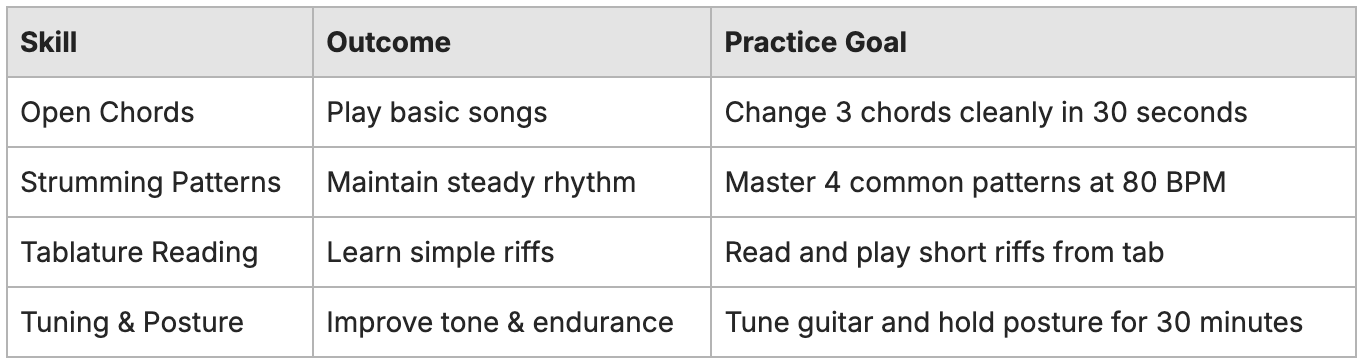
This table clarifies the immediate outcomes beginners can expect and the short practice goals instructors use to track progress. The next subsection lists concrete beginner techniques and practice suggestions that reinforce these outcomes.
Which Basic Skills and Techniques Are Covered?
Beginner lessons cover a compact set of techniques that collectively form a reliable foundation for all further study. Students learn open chord shapes and clean chord transitions, basic strumming and rhythm control, simple single-note riffs via tablature, and correct tuning and hand posture to prevent bad habits. Instructors set achievable practice routines—short, focused daily sessions emphasizing slow, precise movements that gradually increase tempo. These early habits are crucial because they enable rapid application to repertoire, which keeps students engaged and provides measurable milestones to track improvement.
How Do Beginner Lessons Build a Strong Musical Foundation?
A strong beginner program sequences foundation → repertoire → technique refinement so each lesson reinforces practical application of new skills. Early lessons introduce essential chords and rhythm, then immediately apply them to simple songs to teach context, ear training, and timing. As students consolidate repertoire, lessons layer basic music theory and scale work to prepare for soloing and improvisation. Regular milestone checks and tailored practice plans ensure steady development and clear readiness signals for moving to intermediate material, which leads into the advanced curriculum described below.
How Can Advanced Guitar Lessons in Georgetown, KY Help You Master Your Skills?
Advanced lessons target technique refinement, applied theory, improvisation, and genre-specific mastery to prepare players for performance, recording, or composition goals. These modules focus on high-precision techniques (alternate picking, hybrid picking, sweep picking) alongside deep harmonic concepts like modes and chord-scale relationships that enable confident soloing and sophisticated comping. Advanced instruction uses targeted exercises, performance coaching, and repertoire selection to turn technical ability into musical expression. The table below maps advanced modules to practical outcomes and skill measures.
Advanced modules mapped to techniques and outcomes:
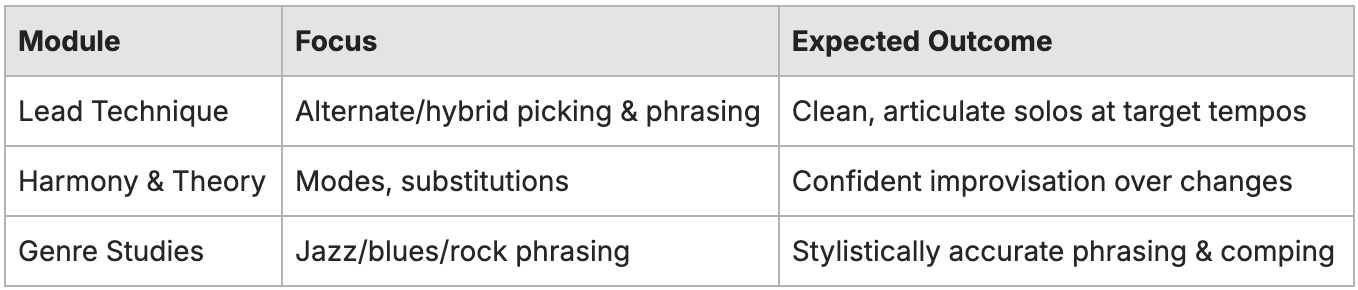
This mapping clarifies how advanced lessons convert technical drills into musical fluency and prepares students for real-world goals like gig preparation or studio work. The next subsection lists advanced topics and their typical practice applications.
What Advanced Techniques and Music Theory Are Included?
Advanced curricula include precise picking techniques, complex rhythm subdivisions, modal overview and application, and phrasing strategies that create musical solos. Exercises blend technical drills with musical contexts—transcribing solos, reharmonizing standards, and applying chord-scale relationships in improvisation. Students work on targeted speed-building with metronome-based routines, phrasing development for emotional storytelling, and harmonic analysis to make real-time choices during performance. These practices develop both technical facility and musical decision-making required for advanced playing.
How Does Personalized Coaching Enhance Advanced Learning?
Personalized coaching refines weak points, tailors repertoire to career goals, and provides focused feedback that group settings can’t replicate. Coaches create custom plans—targeted technical routines, recording projects, and stage-ready setlists—that address each student’s timeline and goals. Assessment methods include recorded playbacks, tempo benchmarks, and repertoire milestones to quantify improvement. Mentorship also provides career-oriented guidance such as preparing for auditions or studio sessions, ensuring lessons translate directly into demonstrable outcomes.
What Are the Options for Private and Group Guitar Lessons in Georgetown, KY?
Lesson formats—private, group, and online—each suit different learning priorities and budgets, and selecting the right format depends on whether you prioritize fast progress, community learning, or convenience. Private lessons deliver one-on-one attention and tailored pacing, group classes provide ensemble practice and peer motivation, and online lessons increase access to specialist instructors while retaining structured curricula. Below is a compact comparison table that outlines attention level, pace, and cost-effectiveness for each format.
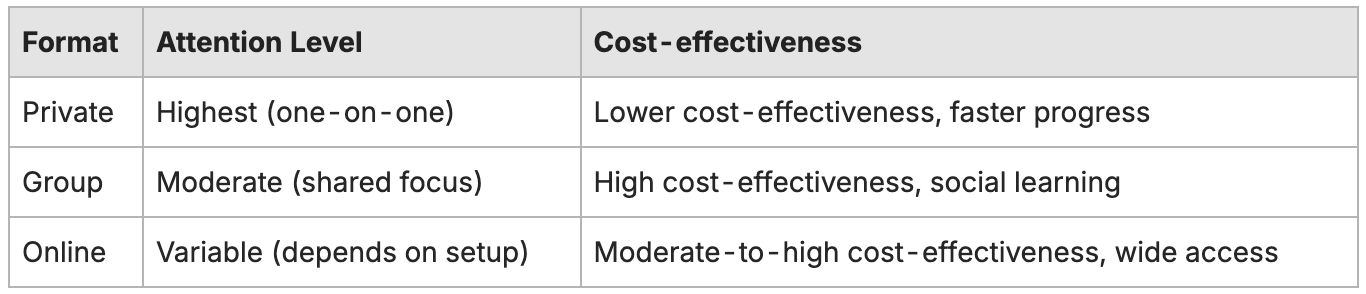
This table helps weigh trade-offs when choosing a format; the following lists summarize who benefits most from each option and practical considerations when enrolling.
Private Lessons: Ideal for focused technical goals, rapid progress, and performance preparation.
Group Classes: Best for beginners seeking motivation, ensemble skills, and lower per-student cost.
Online Lessons: Suited for those needing scheduling flexibility or access to specialized instructors.
Private lessons provide individualized attention and accelerated feedback, while group classes build ensemble skills and peer accountability; online lessons can combine both advantages through hybrid scheduling. For local students in Georgetown, providers like Georgetown Music Sessions / Georgetown Drum Sessions offer all three formats plus guitar rentals and goal-oriented lesson packages to support whichever path a student selects.
How Do Private Guitar Lessons Provide Individualized Attention?
Private lessons begin with an assessment that identifies technical strengths and weaknesses, then establish concrete short- and long-term goals tailored to the student’s musical interests. Curriculum is adapted in pace and content—technical drills, targeted repertoire, and performance coaching—so each session maximizes practice efficiency. Frequent feedback cycles and recorded assignments create measurable benchmarks that guide progression. This focused approach is particularly effective for students preparing for auditions, gigs, or recording work and naturally transitions into group or hybrid formats for ensemble experience.
What Are the Advantages of Group Guitar Classes?
Group classes deliver peer learning, ensemble practice, and motivational structure at a lower per-student cost, making them attractive for beginners and hobbyists. Typical group formats include skill-level cohorts that rotate through technique stations, ensemble rehearsals, and shared repertoire assignments to build timing and listening skills. Peer feedback and performance opportunities create accountability while instructors manage pace to keep cohorts progressing together. For many learners, group classes provide the social reinforcement and ensemble experience that complement private study and accelerate practical musicianship.
Frequently Asked Questions
What should I consider when choosing a guitar instructor in Georgetown?
When selecting a guitar instructor in Georgetown, consider their teaching experience, style, and expertise in the genres you wish to learn. Look for instructors who prioritize student goals and adapt their methods to individual learning styles. Additionally, check for reviews or testimonials from past students to gauge their effectiveness. It's also beneficial to inquire about their lesson structure, flexibility in scheduling, and whether they provide resources like practice materials or performance opportunities to enhance your learning experience.
Are there any age restrictions for guitar lessons in Georgetown?
Guitar lessons in Georgetown are typically available for all ages, from young children to adults. Many instructors offer tailored programs that cater to different age groups and skill levels. For younger students, instructors may focus on engaging methods that keep them motivated, while adult learners might appreciate more advanced techniques and theory. It's advisable to check with specific instructors or music schools about their age policies and whether they have specialized programs for different age ranges.
How can I track my progress in guitar lessons?
Tracking progress in guitar lessons can be achieved through regular assessments and goal-setting with your instructor. Many instructors provide structured lesson plans that include specific milestones, such as mastering certain chords or songs. Keeping a practice journal can also help you document your daily practice, challenges faced, and improvements made. Additionally, recording your playing sessions can provide a clear comparison over time, allowing you to hear your growth and identify areas that need more focus.
What is the typical duration of guitar lessons?
The duration of guitar lessons can vary, but most sessions last between 30 to 60 minutes. Beginners may start with shorter lessons to maintain focus and prevent fatigue, while more advanced students might benefit from longer sessions that allow for deeper exploration of techniques and theory. It's essential to discuss your preferences with your instructor to find a duration that suits your learning style and schedule, ensuring you get the most out of each lesson.
Can I switch between lesson formats (private, group, online)?
Yes, many music schools and instructors in Georgetown allow students to switch between lesson formats as needed. This flexibility can be beneficial if your learning needs or schedule change. For instance, you might start with private lessons for personalized attention and then transition to group classes for ensemble experience. Online lessons can also be integrated for convenience. Always communicate with your instructor about your preferences to ensure a smooth transition between formats.
What resources are available for guitar students in Georgetown?
Guitar students in Georgetown have access to various resources, including instrument rentals, practice spaces, and performance opportunities through local music schools like Georgetown Music Sessions. Many instructors also provide supplementary materials such as sheet music, tablature, and online practice tools. Additionally, students can benefit from community events, workshops, and jam sessions that foster collaboration and enhance learning. Engaging with these resources can significantly enrich your guitar education experience.
Conclusion
Choosing the right guitar lessons in Georgetown can significantly enhance your musical journey, providing structured learning, flexible formats, and personalized instruction tailored to your goals. With options ranging from private lessons to group classes, students can experience measurable progress while enjoying the benefits of local resources and community support. Take the next step in your musical development by exploring the diverse lesson formats available at Georgetown Music Sessions. Discover how our tailored programs can help you achieve your guitar-playing aspirations today.
